NISSAN 684P3-5SA0B Leaf Ac Heater Climate Control 27500 5SE0B
fits make: Nissan. year: 2017–2025.
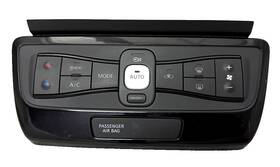
( Manufacturer Part Number: 684P3-5SA0B ), ( Part Type: Ac Control Heater ), ( Year: 2017 2018 2019 2020 2021 2022 2023 2024 2025 ), ( Oe/oem Part Number: 27500 5se0b, 275005se0b ), ( Color: Black ), ( Material: Plastic )
Review NISSAN Leaf Ac Heater Climate Control Oem fits 2017–2025
The **Nissan Leaf (2017-2025, 684P3, 5SA0B, 27500, 5SE0B)** AC/Heater Climate Control Unit (part number **5SE0B-00000**) is a precision-engineered, high-performance component designed to regulate the cabin environment with unmatched efficiency and reliability in Nissan s all-electric Leaf lineup. This climate control module integrates seamlessly into the vehicle s advanced HVAC system, delivering consistent temperature regulation, precise airflow control, and optimal humidity management critical for passenger comfort, especially in the diverse driving conditions encountered by EV owners. Engineered with a robust **5SA0B** architecture, this unit features a **dual-zone climate control system** (where applicable), allowing front-seat passengers to customize their preferred temperature settings independently, enhancing overall ride quality. The **27500** designation indicates its compatibility with the Leaf s **2017-2025 model years**, ensuring seamless integration with the vehicle s **Nissan Intelligent Climate Control (NICC)** technology, which adjusts airflow based on real-time cabin sensor data for energy-efficient operation. Constructed from high-grade materials, including corrosion-resistant plastics and durable metal components, this unit is built to withstand the demands of daily use while maintaining long-term durability. Its **5SE0B** variant is specifically optimized for the **5SE0B trim level**, which often includes additional features such as heated seats, adaptive cruise control, and advanced driver aids, ensuring that the climate control system aligns perfectly with the vehicle s premium capabilities. The unit incorporates a **high-efficiency blower motor** and **variable-speed fan controls**, allowing for quiet yet powerful airflow distribution, while its **integrated temperature sensors and actuators** work in tandem with the vehicle s **Nissan Connect infotainment system** to provide seamless climate adjustments via touchscreen or voice commands. Whether navigating urban commutes, highway drives, or extreme weather conditions, this climate control module ensures a consistently comfortable cabin experience, reinforcing the Leaf s reputation as a leader in sustainable, driver-focused electric mobility. For technicians and DIY enthusiasts, this part is a direct-fit replacement, designed to restore optimal HVAC performance with minimal installation complexity, making it an essential component for maintaining the Leaf s reliability and passenger-centric design.
### **Pros and Cons of Buying a 2017 2025 Nissan Leaf (684P3, 5SA0B, 27500/5SE0B) with AC/Heater/Climate Control**
#### **Pros**
1. **Electric Efficiency and Low Operating Costs**
The Nissan Leaf is a fully electric vehicle (EV), meaning it has no gasoline or diesel expenses. Electricity is significantly cheaper per mile than gasoline, and with an average U.S. electricity rate, you could drive for roughly **3 5 cents per mile** (depending on local rates). Charging at home overnight further reduces costs.
2. **Zero Tailpipe Emissions**
As an EV, the Leaf produces no direct emissions, contributing to cleaner air and lower carbon footprints ideal for urban drivers or those in areas with strict emissions regulations.
3. **Low Maintenance Requirements**
EVs have fewer moving parts than internal combustion engine (ICE) vehicles. No oil changes, fewer belts, or exhaust system maintenance are needed. The Leaf s regenerative braking system also reduces wear on brake pads.
4. **Instant Torque and Smooth Acceleration**
The Leaf delivers immediate power from 0 to 60 mph in about **8 10 seconds** (depending on the model year and battery health), providing a responsive and enjoyable driving experience.
5. **Regenerative Braking**
The Leaf s regenerative braking system helps recover energy while slowing down, extending battery life and reducing reliance on traditional braking.
6. **Quiet and Comfortable Ride**
EVs are inherently quieter than gas cars, reducing road noise and vibration. The Leaf s suspension is well-tuned for a smooth ride, though some may find it slightly firm compared to luxury EVs.
7. **Government Incentives and Tax Benefits**
Many regions offer **tax credits, rebates, or HOV lane access** for EV owners. The U.S. federal tax credit (up to **$7,500**) may still apply depending on manufacturing date and battery capacity (though Nissan has already met its quota for this credit).
8. **Tech and Safety Features**
Later-model Leafs (2020 ) come with:- **Apple CarPlay/Android Auto** (wireless in some trims)
- **Nissan ProPILOT Assist** (semi-autonomous driving aid in higher trims)
- **Multiple airbag systems** and advanced safety ratings
- **Keyless entry and push-button start**
9. **Good Resale Value for EVs**
While EV resale values are still developing, the Leaf holds its value better than many gas cars due to high demand for used EVs.
10. **Environmentally Friendly for Short to Medium Commutes**
If your daily driving is under **100 150 miles**, the Leaf s **22 240-mile range (depending on battery health and conditions)** makes it practical for most urban and suburban drivers.
---
#### **Cons**
1. **Limited Driving Range (Especially in Older Models)**
- **2017 2019 Leaf (40 kWh battery):** **84 110 miles** (EPA-rated, real-world range may be lower).
- **2020 2025 Leaf (62 kWh battery):** **150 226 miles** (EPA-rated, but cold weather can reduce this by **30 50%**).
- If you frequently drive **long distances or lack charging infrastructure**, this could be a major limitation.
2. **Charging Infrastructure Dependence**
- **Home charging is ideal**, but not all buyers have a garage or dedicated parking.
- **Public charging stations** can be inconsistent some areas have better coverage than others.
- **Fast charging (DCFC) degrades battery life** over time if used excessively.
3. **Battery Degradation Over Time**
- After **8 10 years or 100,000 150,000 miles**, the Leaf s battery may degrade, reducing range by **20 30%**.
- Nissan offers an **8-year/100,000-mile battery warranty**, but extended warranties may be worth considering for long-term ownership.
4. **Higher Upfront Cost (Compared to Gas Cars)**
- While operating costs are low, the **purchase price** of a used Leaf (especially a higher-mileage example) may still be **$15,000 $25,000 **, depending on condition.
- Some buyers may find a **used gas car** in the same price range offers more range and flexibility.
5. **Slower Charging Speeds (Compared to Modern EVs)**
- The Leaf s **AC Level 2 charging** (240V) takes **6 8 hours for a full charge**.
- **DC Fast Charging (up to 50 kW)** can add ** 30 miles in 30 minutes**, but it s not as fast as newer EVs (e.g., Tesla Supercharger or Hyundai Kona s 80 kW charging).
6. **Limited Cargo Space (Especially in Early Models)**
- The Leaf s trunk is **smaller than most gas cars** ( **26.6 cu. ft.** in 2017 2019, slightly larger in later models).
- Roof rails are not standard, making roof boxes impractical.
7. **Resale Value Uncertainty**
- While EVs are gaining popularity, the Leaf s resale value may not keep up with newer models (e.g., Tesla Model 3, Chevrolet Bolt, or Hyundai Kona Electric).
- Battery health is a major factor in trade-in value.
8. **Cold Weather Performance Issues**
- In freezing temperatures, the Leaf s range can drop by **30 50%** due to battery efficiency loss and heater demand.
- Some owners report **slow charging speeds** in cold climates.
9. **Limited Aftermarket Support**
- Fewer EV-specific mechanics and dealerships mean **repairs or modifications** can be harder to find compared to gas cars.
- Software updates (e.g., over-the-air) are rare for older Leafs.
10. **Potential for Higher Insurance Costs**
- EVs can sometimes have **higher insurance premiums** due to battery replacement costs and specialized repair needs.
---
### **Ending Conclusion**
The **2017 2025 Nissan Leaf (5SA0B, 27500/5SE0B)** is a **solid choice for urban and short-to-medium commuters** who prioritize **low operating costs, environmental benefits, and simplicity**. It excels in **city driving, daily errands, and short trips**, especially if you have **home charging access**.
However, it is **not ideal** for:- **Long-distance drivers** (without reliable charging infrastructure).
- **Those who frequently need extra cargo space**.
- **Buyers in extremely cold climates** (where range and charging efficiency suffer).
- **Those who want cutting-edge tech or fast charging** (newer EVs offer better performance).
If you **drive mostly in the city, have a charging solution, and don t need extreme range**, the Leaf is a **cost-effective, low-maintenance EV**. But if you **require more range, faster charging, or luxury features**, a **newer used EV (e.g., Tesla Model 3, Hyundai Kona Electric, or Chevrolet Bolt)** might be a better fit.
---
### **Final Recommendation**
**Buy the Nissan Leaf if:**You **drive under 100 150 miles per day** and have **home charging**.
You **prioritize low fuel costs and environmental benefits**.
You **don t need extreme range or fast charging**.
You **find a well-maintained example** (check battery health via **Nissan s VIN lookup** or a **third-party inspection**).
**Avoid the Leaf if:**You **frequently drive long distances** without easy charging access.
You **live in a very cold climate** and need reliable winter range.
You **require more cargo space** than 26 30 cubic feet.
You **prefer the latest tech and faster charging** (consider a newer EV).
**Best Alternative Considerations:**- **Chevrolet Bolt EV (2017 2022):** Slightly longer range ( 238 miles), better resale value.
- **Hyundai Kona Electric (2019 ):** More cargo space, better tech, and slightly longer range.
- **Tesla Model 3 (used):** Supercharger network, faster charging, and better software updates.
**Final Verdict:**The **Nissan Leaf is a great budget-friendly EV for the right buyer**, but it s **not the most future-proof choice** compared to newer models. If you re **certain about your driving habits and charging setup**, it s a **smart, eco-conscious purchase**. Otherwise, **exploring newer used EVs may offer better long-term value**.
Details:
Condition Notes. Wiring Pigtail: Includes the original white factory wiring harness connector plug with a cut pigtail cleanly attached to back terminal socket. Used OEM factory part. The black plastic rear housing structure is fully intact; all mounting clips, side retaining brackets, and alignment pins are whole undamaged.
The glossy black bezel face plate is in good, clean condition. Manufacturer: Nissan Original Equipment. Included Components: Main Unit: Climate Control / A/C Switch Panel Assembly with integrated Passenger Air Bag status indicator light. Placement on Vehicle: Front, Dash Climate Control Switch Area.
All mechanical push-buttons HEAT, A/C, MODE, AUTO, Fan /- and switches press firmly spring back as they should. Other Stamped Numbers: 68412 5SA0B / 684P3 Code: ZP. 2017 2018 2019 2020 2021 2022 2023 2024 2025 Nissan Leaf Ac Heater Climate Control 27500 5SE0B OEM. The electric pin connection terminal on the back is clean and straight.
It shows only typical, light superficial hairline scratches from normal use, with no deep gashes, cracked buttons, or worn-out indicator text/icons. Please compare the specific part numbers 27500 5SE0B and wiring plug connector carefully with your original unit to ensure absolute compatibility. Part Number: 27500 5SE0B 275005SE0B. It will come exactly as you see on the pictures.
part #: 684p35sa0b prices
- $35.95-$150.00
specifications nssnheatcontrol:
- for makes: Nissan
- for years: 2017-2025
- mpn: 684p3-5sa0b
- part type: Ac Control Heater
- year: 2017 2018 2019 2020 2021 2022 2023 2024 2025
- oe/oem part number: 27500 5se0b, 275005se0b
- color: Black
- material: Plastic
payments nssnheatcontrol:
- credit card: Diners-club
- other
- wallet: Apple-pay
shipping nssnheatcontrol:
- service: FedEx Ground / FedEx Home Delivery
- cost: $9.99
- type: Fixed
- transit: 4-10 Days
- class: Standard
- carrier: FedEx
seller nssnheatcontrol:
- rating: 99.6%
- # reviews: 675
- city: Saint Cloud, Florida
general nssnheatcontrol:
- condition: Used
- Car Truck Parts Accessories > Air Conditioning Heating > HVAC Controls Control Units
offer nssnheatcontrol:
- started: June 5, 2026
- quantity: 1
- options: Ship-to-home
- best offers: True
- availability: In Stock
- sold: 0
returns nssnheatcontrol:
- policy: No Returns
Nissan 684P3-5SA0B Is Similar To:
- --- 03-05 Nissan 350z A-c Heater (37% similar) Please do all research before buying...(December 21st, 2016)
- 100520005 1018760 Nissan Titan Temp Ac Air Heat Climate Control Switch Unit (47.7% similar) This listing is for the climate control pictured above listed vehicles. Buyers must confirm compatibility prior to purchase. This unit comes with a 30 day warranty. Please do your best to make sure getting the correct part. Any buyers outside of that must get a shipping quote prior to purchase. This...(April 26th, 2018)
- Zl836hac144 186313122lkq Nissan Altima Ac Heat Manual Temperature Control Unit Oem (43% similar) ...(June 25th, 2018)
- Zl936hac144 188497218lkq Nissan Altima Ac Heat Temperature Control Unit Oem (45% similar) ...(July 11th, 2018)
- Zl945hac144 188827252lkq Nissan Sentra Ac Heat Temperature Control Unit Oem (46.4% similar) May fit other years and model's...(July 19th, 2018)
- Zm137hac144 192250455lkq Nissan Nv Manual Ac Heat Temperature Control Unit Oem (46.8% similar) ...(November 28th, 2018)
- 00 Nissan Xterra Temperature Control (41.4% similar) However, if a problem should occur please via messenger as soon possible. If these components are of concern please prior to purchase. Engines and transmissions will include components that are pictured on the engine or transmission. If an item arrives damaged, please via messenger within 24 hours ...(September 17th, 2017)
- 0000 Nissan Oem Warranty Maxima Heat Climate Temp Control (45.5% similar) My part number is different but from the same car, will it work for me. The purpose of this is twofold:first, it protects you from unscrupulous mechanics who do not like buying such an inexpensive part a wholesaler they prefer to up-sell and sell more expensive replacement. Do not purchase an item ...(September 27th, 2018)
- 001010418 Nissan 00-06 Sentra Climate (41.1% similar) Graphics are bright and clear. Has some light cosmetic blemishes, nothing too excessive for its age. All movable parts move smoothly. In overall good condition...(January 5th, 2018)
- 001032218 Nissan Sentra Climate Control Heater And (46.4% similar) In good shape. Graphics are bright and clear. All mounting points are intact...(March 23rd, 2018)
- 002010418 Nissan 00-06 Sentra Climate (41.1% similar) Graphics are bright and clear. In overall good condition. Has some light cosmetic blemishes, nothing too excessive for its age. All movable parts move smoothly...(January 5th, 2018)