NISSAN F3XH19E752AH Temperature Heater Control A/c
fits model: Quest. make: Nissan. year: 1993-98.
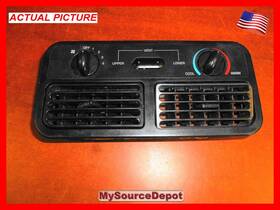
( Manufacturer Part Number: F3XH19E752AH ), ( Part Type: Control Heater ), ( Location: A3c3 ), ( Manufacturer Warranty: Our Warranty 90 Days ), ( Color: Black )
Review NISSAN 1993 98 Temperature A/c Heater Control fits QUEST 1993-98
The **Nissan F3XH19E752AH (1993 1998 Quest) Temperature and A/C Heater Control Module** is a critical electrical component designed to regulate the climate control system within Nissan s 1993 through 1998 Quest models, ensuring precise temperature and airflow adjustments for passenger comfort. This integrated control unit serves as the central hub for the vehicle s climate system, interfacing with the temperature dial, air distribution controls, and the A/C compressor to deliver seamless operation. Engineered with a durable, yet compact design, the module houses internal circuitry that processes input signals from the driver s climate controls, translating manual adjustments into electrical commands that activate the blower motor, heater core, and A/C compressor as needed. Over the years, this component has proven essential in maintaining optimal cabin temperature, balancing airflow distribution between the defroster, face vents, and foot wells, while also managing the engagement of the air conditioning system for cooling efficiency. Commonly found in the dashboard or under the steering column, the module is built to withstand the rigors of daily use, though wear over time such as degraded wiring, faulty sensors, or internal circuit failures can lead to erratic temperature fluctuations, weak airflow, or complete climate control malfunctions. Replacing this module with the **F3XH19E752AH** ensures compatibility with the Quest s wiring harness and control logic, restoring full functionality to the heating, air conditioning, and ventilation systems. Whether addressing persistent issues like overheating, insufficient cooling, or unresponsive controls, this aftermarket or OEM replacement part is a straightforward solution for restoring the vehicle s climate comfort to factory specifications.
### **Pros and Cons of Buying a 1993 1998 Nissan Quest (F3XH19E752AH) with Temperature/A/C Heater Control Issues**
#### **Pros**
1. **Reliable Engine and Transmission**
- The 1993 1998 Nissan Quest typically comes with a **3.0L V6 engine (Z30)** or a **2.4L 4-cylinder (CA24DE)**, both known for durability if well-maintained. The V6 is more powerful and better suited for towing or highway driving.
- The **4-speed automatic transmission (RE4R04A for V6 models)** is robust, though some early 4-cylinder models used a **5-speed manual**, which can be more reliable long-term if properly serviced.
2. **Spacious and Practical Minivan Design**
- The Quest offers **three rows of seating**, making it ideal for families or those needing extra cargo space.
- High roof and sliding doors provide easy access, which is a significant advantage for older passengers or those with mobility concerns.
- The **cargo area is large**, with foldable rear seats, making it useful for hauling gear, groceries, or luggage.
3. **Good Resale Value for a Minivan**
- Compared to other minivans from the early '90s (e.g., Chrysler Town & Country, Ford Aerostar), the Quest holds its value reasonably well, especially if it has been maintained.
- Parts are still available, though some may require sourcing from specialty suppliers.
4. **Comfortable Ride and Handling**
- The Quest has a **softer suspension** compared to modern vehicles, which makes for a smoother ride on rough roads.
- The **front-wheel-drive layout** (except for some early 4-cylinder models, which were rear-wheel-drive) provides better traction in snow or wet conditions than some competitors.
5. **Affordable Purchase Price**
- Due to its age, the Quest is **cheap to buy**, often ranging from **$1,000 to $5,000** depending on condition. This makes it a budget-friendly option for those needing space.
6. **Simple Mechanical Design**
- The **Z30 V6 engine** is relatively straightforward compared to modern turbocharged or complex fuel-injected systems, making repairs less intimidating for DIYers.
- The **transmission and drivetrain** are robust, with fewer electronic failures than later models.
---
#### **Cons**
1. **Temperature/Air Conditioning (A/C) and Heater Control Issues**
- The **1993 1998 Quest is notorious for failing temperature and A/C controls**, often due to:- **Faulty temperature control cables** (common in early models).
- **Worn-out or leaking hoses** in the heater core or A/C system.
- **Blown fuses or failing climate control switches**.
- **Heater core leaks**, which can lead to sweet-smelling coolant in the cabin and reduced heating efficiency.
- **Repairs can be costly** replacing a heater core or A/C compressor may run **$500 $1,200**, depending on labor and parts.
- **Temporary fixes (e.g., replacing cables or switches) may not last long**, leading to repeated maintenance costs.
2. **Electrical and Electronics Reliability**
- The **climate control system** is prone to **electrical gremlins**, such as:- **Failing door locks or window regulators** (common in older Nissans).
- **Blown fuses or corroded connections** in the fuse box.
- **Defective radio or power window switches**.
- **Modern diagnostics** (OBD-II) are not present in these models, making troubleshooting harder without a scan tool.
3. **Rust and Structural Concerns**
- Many **1990s minivans suffer from rust**, particularly in:- **Rockers (side panels near the wheels)**
- **Floor pans (especially in snowy climates)**
- **Hood and trunk areas**
- **Rust can compromise structural integrity**, leading to **frame rot** or **suspension issues** over time.
- **Undercoating is minimal or nonexistent**, accelerating rust in wet conditions.
4. **Safety and Modern Standards**
- **No modern safety features** (no ABS, no airbags in some models, no stability control).
- **Poor visibility** due to **small side windows** and **high roofline** (can be disorienting in traffic).
- **Noisy cabin** early models have **thin panels** that transmit road noise and engine vibration.
- **Poor fuel economy** the V6 gets around **16 18 MPG highway**, while the 4-cylinder is slightly better but still inefficient by today s standards.
5. **Maintenance and Part Availability**
- **Some parts are discontinued** (e.g., specific hoses, belts, or sensors), requiring **aftermarket or salvage-yard sourcing**.
- **Labor costs** for repairs can be high if the vehicle is not a common service project.
- **Tires and brakes** may need frequent replacement due to wear over 25 years.
6. **Reliability of Other Systems**
- **Power steering** can fail, requiring a **pump replacement** (a costly repair).
- **Water pump and timing belt** (if applicable) may need replacement, though the Z30 V6 uses a **serpentine belt system** rather than a timing belt.
- **Suspension components** (shocks, struts, bushings) often wear out, leading to **rough rides or handling issues**.
7. **Resale and Long-Term Viability**
- **Not a practical long-term keep**, as parts and labor costs will continue to rise.
- **Insurance may be expensive** due to age and potential repair costs.
- **Modern alternatives (used SUVs, crossovers, or even newer minivans like the Toyota Sienna or Honda Odyssey)** offer better reliability and safety for a similar price.
---
### **Conclusion**
The **1993 1998 Nissan Quest** is a **practical, space-efficient vehicle** for those needing a **budget-friendly minivan**, especially if the **temperature/A/C and heater control issues are minor or easily fixable**. It remains **reliable in terms of engine and transmission**, making it a **good short-to-medium-term solution** for families or those who prioritize cargo space over modern comforts.
However, **the climate control problems are a major drawback**, as they can turn into **recurring and expensive repairs**. If the **heater core leaks, A/C compressor fails, or control cables need constant replacement**, the cost of ownership can **quickly outweigh the savings** of buying an older vehicle. Additionally, **rust, electrical issues, and outdated safety features** make it less ideal for long-term use.
For someone who **needs the space now but can afford minor repairs**, the Quest is a **decent buy**. However, if **reliability and low maintenance** are priorities, a **used SUV (e.g., Honda CR-V, Toyota RAV4) or a newer minivan (if budget allows)** would be a **far better long-term investment**.
---
### **Recommendation**
- **Buy the Quest if:**- You **need the space immediately** and can **budget for potential climate control repairs** (expect **$300 $1,000 ** for heater core/A/C fixes).
- You **plan to keep it for 2 3 years** and then upgrade to a more reliable used vehicle.
- You **live in a mild climate** where rust and electrical issues are less severe.
- You **enjoy DIY repairs** and are willing to **source parts** from salvage yards or online suppliers.
- **Avoid the Quest if:**- You **cannot afford unexpected repair costs**, especially for **heater core leaks or A/C failures**.
- You **prioritize reliability and safety** over space modern used SUVs or crossovers will last longer with fewer issues.
- You **live in a cold climate**, as **frozen heater cores and poor insulation** make winter driving uncomfortable.
- You **want a vehicle that holds value** the Quest depreciates quickly compared to more durable alternatives.
**Alternative Recommendations:**- **For a used minivan:** Consider a **2000 2005 Toyota Sienna (early models with 3.0L V6)** or **1999 2002 Honda Odyssey**, which are **more reliable** and have **better climate control systems**.
- **For a used SUV:** A **2005 2010 Honda CR-V or Toyota RAV4** offers **better fuel economy, safety, and longevity** for a similar price.
- **For a budget-friendly option:** A **2000 2005 Ford Aerostar or Chrysler Town & Country** may be cheaper but **share similar reliability issues** as the Quest.
**Final Verdict:** The **Nissan Quest is a functional but flawed choice** it s **great for space and affordability but risky for long-term ownership** due to **climate control and rust concerns**. If you **must buy it**, **inspect the heater core, A/C
Details:
part #: f3xh19e752ah prices
- $14.99-$89.99
specifications nssnheatcontrol:
- for models: Quest
- for makes: Nissan
- for years: 1993-98
- mpn: F3xh19e752ah
- part type: Control Heater
- location: A3c3
- manufacturer warranty: Our Warranty 90 Days
- color: Black
general nssnheatcontrol:
- condition: Used
- Car Truck Parts Accessories > Air Conditioning Heating > HVAC Controls Control Units
seller nssnheatcontrol:
- rating: 99.5%
- city: Morriston, Florida
- # reviews: 6593
offer nssnheatcontrol:
- quantity: 1
- availability: In Stock
- started: May 8, 2026
- options: Ship-to-home
- sold: 0
returns nssnheatcontrol:
- time: 30 Days
- policy: Returns Accepted
- paid by: Seller
shipping nssnheatcontrol:
- cost: $0.00
- carrier: USPS
- service: USPS Ground Advantage
- type: Fixed
- class: Standard
- transit: 5-11 Days
payments nssnheatcontrol:
- credit card: Discover
- other
- wallet: Google-pay
Nissan F3XH19E752AH Is Similar To:
- --- 03-05 Nissan 350z A-c Heater (39.2% similar) Please do all research before buying...(December 21st, 2016)
- 100520005 1018760 Nissan Titan Temp Ac Air Heat Climate Control Switch Unit (42.9% similar) This listing is for the climate control pictured above listed vehicles. Buyers must confirm compatibility prior to purchase. This unit comes with a 30 day warranty. Please do your best to make sure getting the correct part. Any buyers outside of that must get a shipping quote prior to purchase. This...(April 26th, 2018)
- Zl836hac144 186313122lkq Nissan Altima Ac Heat Manual Temperature Control Unit Oem (38.1% similar) ...(June 25th, 2018)
- Zl936hac144 188497218lkq Nissan Altima Ac Heat Temperature Control Unit Oem (45.7% similar) ...(July 11th, 2018)
- Zl945hac144 188827252lkq Nissan Sentra Ac Heat Temperature Control Unit Oem (47.1% similar) May fit other years and model's...(July 19th, 2018)
- Zm137hac144 192250455lkq Nissan Nv Manual Ac Heat Temperature Control Unit Oem (43.4% similar) ...(November 28th, 2018)
- 00 Nissan Xterra Temperature Control (56% similar) However, if a problem should occur please via messenger as soon possible. If these components are of concern please prior to purchase. Engines and transmissions will include components that are pictured on the engine or transmission. If an item arrives damaged, please via messenger within 24 hours ...(September 17th, 2017)
- 0000 Nissan Oem Warranty Maxima Heat Climate Temp Control (44.6% similar) My part number is different but from the same car, will it work for me. The purpose of this is twofold:first, it protects you from unscrupulous mechanics who do not like buying such an inexpensive part a wholesaler they prefer to up-sell and sell more expensive replacement. Do not purchase an item ...(September 27th, 2018)
- 001032218 Nissan Sentra Climate Control Heater And (40.4% similar) In good shape. Graphics are bright and clear. All mounting points are intact...(March 23rd, 2018)
- 002032218 Nissan Sentra Climate Control Heater And (40.4% similar) In good shape. Graphics are bright and clear. All mounting points are intact...(March 23rd, 2018)
- 003031418 Nissan Sentra Climate Control Heater And (40.4% similar) All mounting points are intact. Graphics are bright and clear. In good shape...(March 14th, 2018)